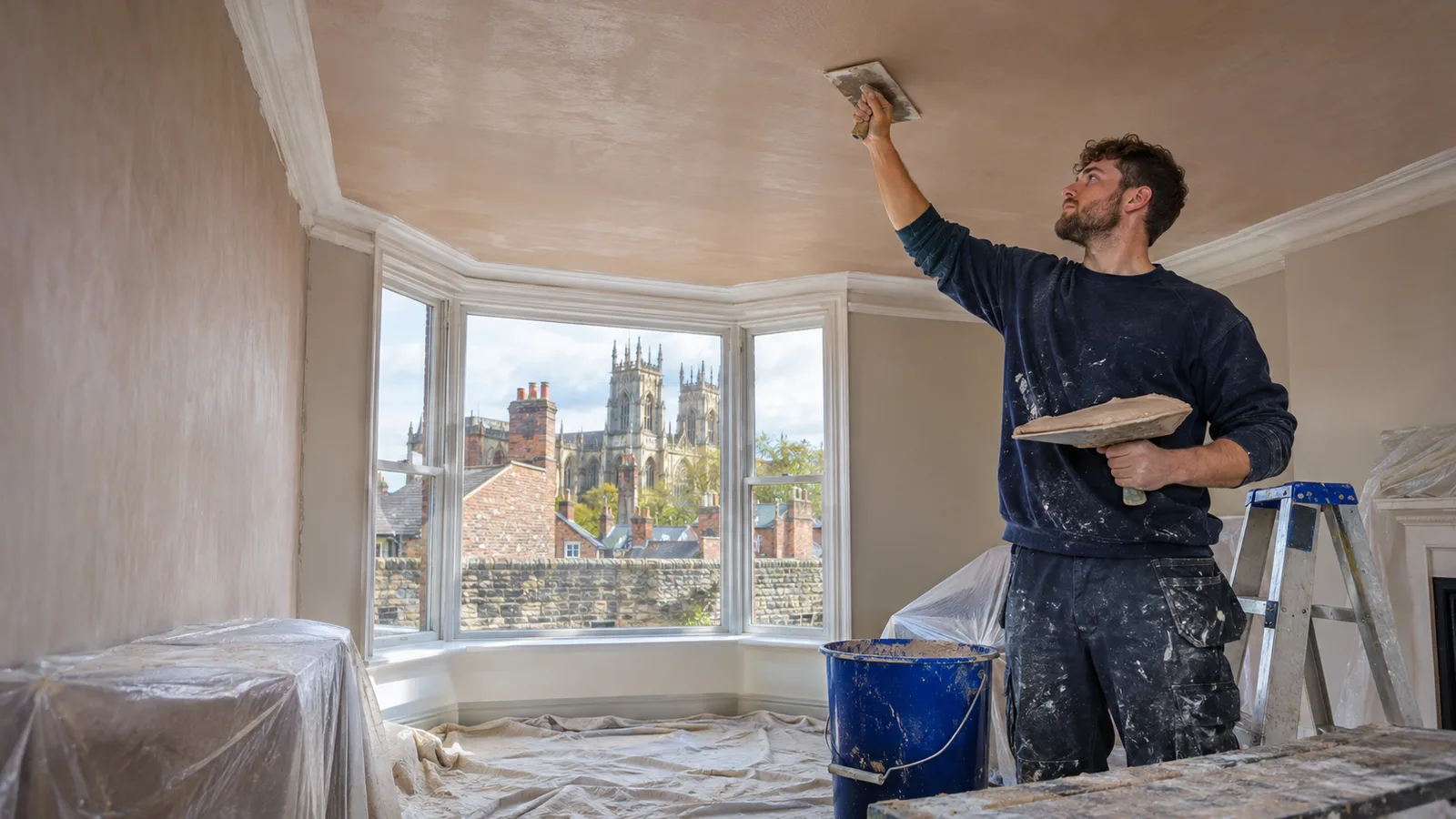
A skilled plasterer applying a smooth finish to a repaired ceiling in a protected York home

Plaster repairs across York

Plaster Repairs In York

Careful repairs for cracked walls, damaged ceilings and worn plaster, finished smooth and ready for decoration.

✓Cracked wall plaster ✓Damaged ceilings ✓Loose plaster ✓Post-trade patching

A stable repair starts underneath

Reliable plaster repairs in York

Plaster repairs in York need more than a quick coat over the visible damage. Loose material must be removed, cracks need the right preparation, and the new plaster must be compatible with the surface beneath it. York plasterers repairs damaged walls and ceilings with close attention to the background, the edges of the repair and the finish required for decorating.

We deal with localised cracks, blown or hollow plaster, damaged corners, failed patches, holes left after electrical or plumbing work, and ceiling damage caused by movement or a previous leak. Before work starts, the affected area is assessed to establish whether it needs filling, patching, re-skimming or removing back to a sound base.

York has housing from many periods, including historic properties around Bishophill and terraced homes in Holgate, alongside later development in areas such as Acomb. The correct repair method depends on the building and its existing materials. Older walls may contain lime plaster, while newer interiors commonly use gypsum plaster or plasterboard. Treating every surface in the same way can lead to poor adhesion, trapped moisture or a patch that remains visible after painting. Broader plastering in York can address rooms that need more than a local repair.
Diagnose before covering

Wall and ceiling damage we repair

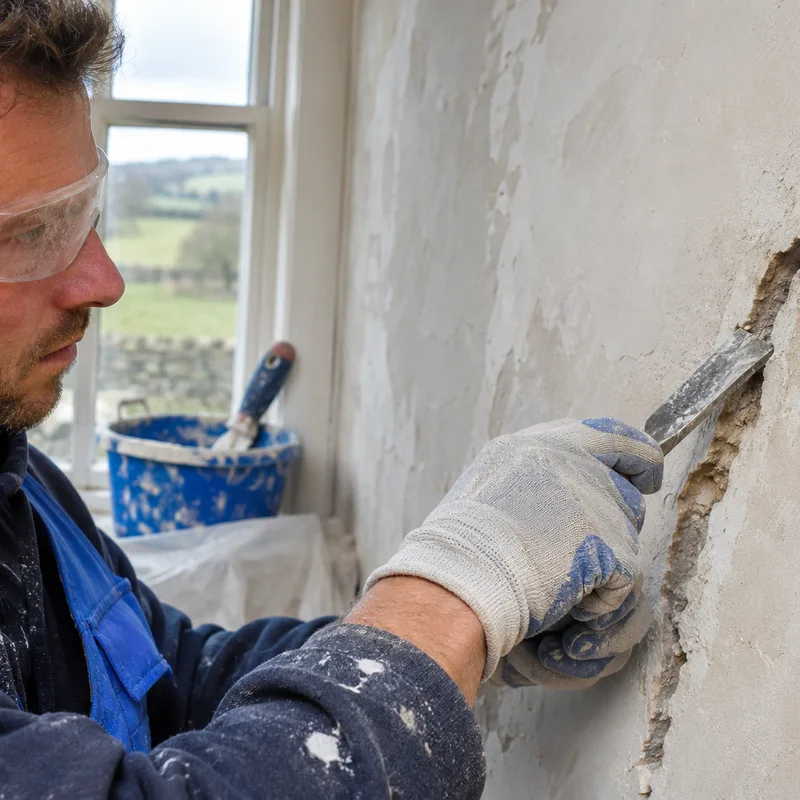
A plasterer cutting back a wall crack to sound edges before reinforcement and repair plaster
Good preparation removes weak edges and gives the repair a stable base.

Small defects often reveal a larger area of loose plaster, so the first job is to find where the sound surface begins. Tapping around a crack can identify hollow plaster, while staining or soft material may indicate that moisture has reached the ceiling or wall. An active leak must be repaired and the background allowed to dry before new plaster is applied.

Common work includes stabilising cracks around openings, repairing damaged internal corners, filling chases, rebuilding broken edges and patching plasterboard. Where a surface has widespread shallow defects but remains secure, a skim coat may give a better result than several isolated patches. If the plaster has detached from lath, masonry or plasterboard, the failed section usually needs to be removed rather than covered.

Hairline cracks can sometimes be opened slightly, cleaned and filled. Recurring cracks may require scrim tape or another reinforcement before finishing, although reinforcement cannot correct ongoing structural movement. Stepped cracking through masonry, rapidly widening gaps or repeated movement should be investigated before cosmetic work begins.

Surface-specific repair work

Repairs matched to the existing surface

Cracked wall plaster

The crack is opened and cleaned where necessary, then filled or reinforced according to its width, depth and likelihood of recurring. The surrounding surface is feathered to reduce visible edges after decoration.

Blown or loose areas

Hollow plaster is removed to a secure boundary. The exposed base is prepared, built out to the correct depth and finished level with the existing wall.

Plasterboard damage

Holes and broken board are cut back neatly and supported before a new piece is fitted. Joints are taped and finished to limit cracking around the patch.

Damaged corners and edges

Broken external corners may need a new angle bead rather than filler alone. The repair is built out and ruled level so skirting, architrave and decoration meet a straight edge.

Worn or uneven surfaces

Secure plaster with widespread marks or shallow imperfections may suit re-skimming. Loose coatings and contamination must still be dealt with before a finish coat is applied.

Post-trade patching

Chases and openings left by wiring, pipework or access work are filled in suitable layers. Deep repairs need proper backing and drying time rather than one thick application.

Secure and level restoration

Ceiling repairs York homeowners can rely on

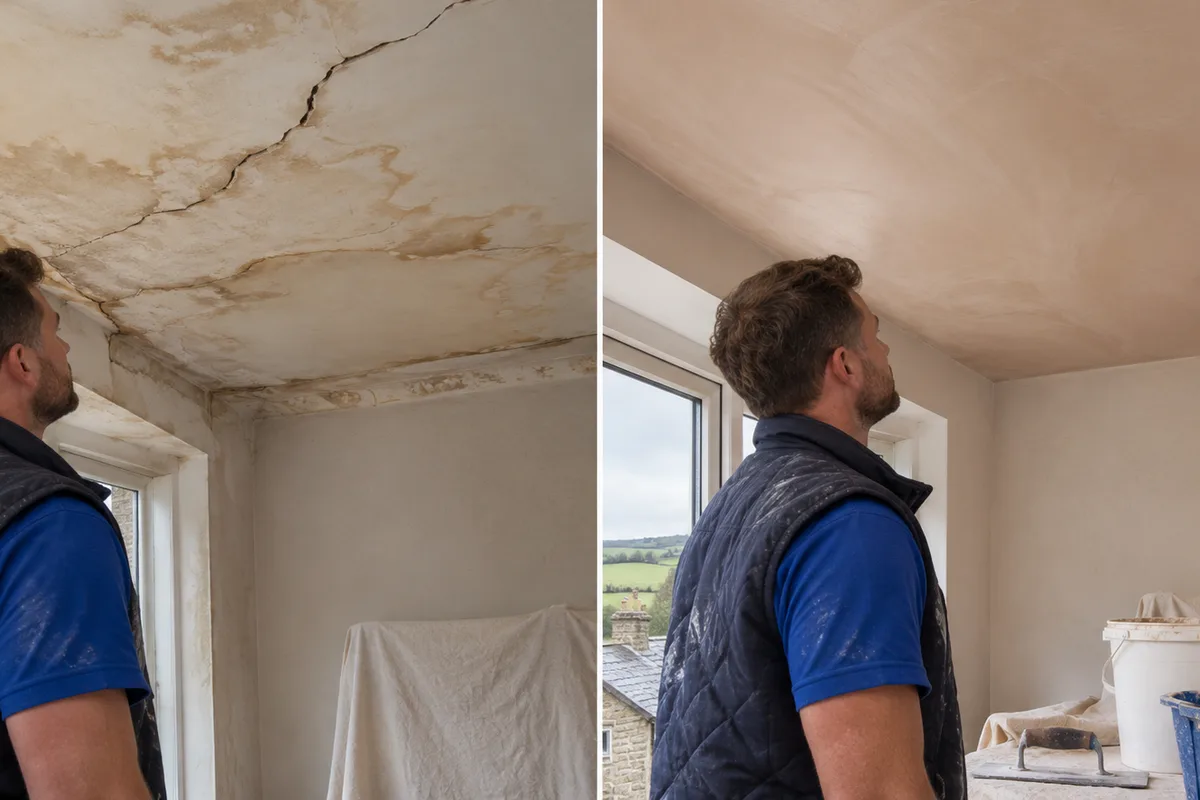
A cracked water-marked plasterboard ceiling before repair and the same ceiling smoothly patched for paint
A ceiling patch should be secure, level and blended into the surrounding finish.

Ceiling repairs require careful diagnosis because the visible mark may not show the full extent of the damage. Brown staining can follow a roof or plumbing leak, sagging plasterboard may have lost its strength, and cracks can develop along board joints or where different backgrounds meet. Any source of water must be stopped before restoration starts.

A small, stable defect may be cut out and patched. Damaged plasterboard often needs to be removed back to the centre of the supporting joists or noggins so the replacement board has secure fixing points. The new joints are taped, filled and feathered into the surrounding ceiling. If the existing finish is sound but heavily marked, the whole ceiling may be skimmed to avoid a patchwork appearance.

Traditional lath-and-plaster ceilings need a different approach. Loose plaster can indicate broken keys behind the laths, and indiscriminate overboarding may conceal rather than resolve the condition. The repair should account for the ceiling's construction, weight and stability. Textured coatings also need caution because some older coatings can contain asbestos. Suspect material should be tested by a competent asbestos surveyor before it is disturbed.

From diagnosis to drying

How a plaster repair is completed

Each stage protects the property, removes unstable material and builds the repair back from a firm base.

  1. 01

    Inspect the damage

    We examine the visible defect and the surface around it, looking for loose plaster, movement, staining and failed previous repairs. The proposed scope is based on what is sound, not simply the size of the visible crack.

  2. 02

    Confirm the cause is resolved

    Active leaks, persistent condensation or significant movement should be addressed first. Applying fresh plaster over a wet or unstable background is likely to produce another failure.

  3. 03

    Protect the working area

    Floors, fixed fittings and nearby surfaces are covered. Dust is controlled as far as practical, particularly when old plaster must be cut back or removed.

  4. 04

    Prepare a firm base

    Loose material is removed and the edges are cleaned. Depending on the background, preparation may include mechanical keys, bonding agents, reinforcement, new plasterboard or a suitable base coat.

  5. 05

    Build and finish the repair

    Deep areas are brought out in appropriate layers before the finishing plaster is applied. The edges are feathered or the wider surface is skimmed where that will produce the better decorative result.

  6. 06

    Allow proper drying

    Fresh plaster should dry naturally before decoration. Ventilation and gentle background warmth help, but strong direct heat can dry the face too quickly and contribute to cracking.

Planning your repair budget

How Much Do Plaster Repairs Cost in York?

Plaster repairs in York typically cost about £150 to £350 for a small local patch, while larger wall or ceiling repairs often range from £350 to £900 or more. The final price depends on the damaged area, ceiling height, access, background condition, drying requirements and whether plasterboard, beads or reinforcement are needed. Leak damage, extensive loose plaster and a full skim increase labour and materials. The exact cost is confirmed after the affected surface has been inspected and the repair scope agreed.

Decoration-ready results

A finish that is ready for decoration

A successful patch should be firm, flat and properly joined to the original surface. It may still be visible while it dries because fresh plaster changes colour as moisture leaves it. Drying time varies with repair depth, background porosity, ventilation and indoor temperature, so a calendar promise is less useful than checking the surface itself.

New plaster should normally become uniformly pale and dry before painting. The first coating must suit fresh plaster and the paint manufacturer's instructions. Applying standard paint too early can trap moisture or cause adhesion problems. Where staining was caused by a resolved leak, a suitable stain-blocking coating may also be needed after the plaster has dried.

Plaster repair is primarily a surface repair. It will not solve roof leaks, leaking pipework, persistent damp or structural movement. York's cooler, wetter periods can slow natural drying when rooms have little ventilation, so repairs should be given suitable airflow and moderate warmth. This is particularly relevant in occupied rooms where windows stay closed for long periods.

York plasterers provides a clear repair scope based on the condition found. You will know which areas are being removed, whether the work is a patch or a wider skim, and what needs to happen before painting.

Arrange an assessment before loose plaster spreads or ceiling damage becomes harder to isolate. You will receive a practical repair plan based on the existing surface and the cause of the defect.

Call for a Free Estimate

Helpful answers

Questions about plaster and ceiling repairs

How long do plaster repairs in York take?

A small accessible patch can often be completed during one visit, while larger or deeper repairs may need separate base and finish stages. Ceiling height, the amount of loose material and drying between coats all affect the schedule. Decoration must wait until the new plaster has dried uniformly.

Can you repair a ceiling after a water leak?

Yes, once the leak has been fixed and the ceiling is dry enough to assess safely. Soft plasterboard, failed fixings and loose plaster must be removed rather than covered. Staining may need a stain-blocking coating after the repaired plaster has dried.

Should a cracked wall be patched or fully skimmed?

A local patch is suitable when the surrounding plaster is firm and the defect is limited, while a full skim is often better when a secure wall has widespread shallow cracks or poor previous repairs. Hollow or detached plaster must first be removed back to sound material.

Can old lime plaster be repaired with modern gypsum plaster?

The repair material should be chosen for compatibility with the existing wall and its moisture behaviour. Historic properties in areas such as Bishophill may contain traditional lime plaster, which is more vapour permeable than dense gypsum products. The background should be identified before the repair specification is set.

Will a repaired crack come back?

A crack can return if the building or background continues to move. Proper preparation, secure edges and reinforcement can reduce cracking at a stable defect, but they cannot stop structural movement. Widening, stepped or repeatedly recurring cracks should be investigated before redecoration.

Can you repair textured ceilings?

Textured ceilings can sometimes be patched or covered, but older coatings should be assessed before sanding, scraping or cutting. Some textured coatings applied in the past contained asbestos, so suspect material needs appropriate testing before work disturbs it.

Do I need to empty the room before ceiling repairs?

The working area should be as clear as practical so the ceiling can be reached safely and furniture can be protected. Large items that cannot be moved can often be covered, but access requirements depend on the repair position and the equipment needed.

Plan the right repair

Restore damaged plaster with the right repair

Describe the cracks, loose areas or ceiling damage you have found. York plasterers will assess the surface, explain the suitable repair method and provide a clear scope before work begins.